

Fragrance-Free vs Hypoallergenic Skincare: What’s the Difference?
, by Tatianna Gerard, 11 min reading time
, by Tatianna Gerard, 11 min reading time
For individuals with eczema, dermatitis, or generally sensitive skin, selecting suitable skincare products can be challenging. Product labels such as “fragrance-free,” “unscented,” and “hypoallergenic” are often used to imply that a formulation is gentle or non-irritating — however, these terms are often misunderstood. Fragrance-free doesn’t always mean unscented, and hypoallergenic doesn’t mean allergy-proof. The truth is, even products that sound safe can contain natural or synthetic ingredients that irritate sensitive skin.
In this guide, we’ll break down what each label actually means, how to tell the difference between synthetic fragrance and natural botanical scent, and what to look for if you want skincare that’s truly kind to your skin barrier.
When a product is labelled fragrance-free, it means that no artificial perfumes or fragrance compounds have been added to give it a particular scent. These formulas are typically designed for sensitive or allergy-prone skin to help reduce the risk of irritation or reactions.
However, fragrance-free does not always mean odourless. Some skincare products may still have a mild aroma that naturally comes from their base ingredients. For instance, botanical components like aloe vera, chamomile, or calendula have their own natural scent — even when no synthetic fragrance is used.
It’s important to note the distinction between fragrance and scent.
When checking skincare labels, added fragrance may appear under various names. Some of the most common include:
While not all of these compounds are harmful, they can trigger irritation or allergic reactions in people with reactive skin. Choosing truly fragrance-free products — particularly those formulated for sensitive or eczema-prone skin — helps reduce unnecessary exposure to potential irritants.
The term hypoallergenic is commonly used in skincare to suggest that a product is less likely to cause an allergic reaction. However, it’s important to note that this term is not strictly regulated in Australia or many other countries. This means manufacturers can use it even if the product still contains ingredients that may irritate sensitive or allergy-prone skin.
In general, hypoallergenic products are formulated to reduce the likelihood of triggering a reaction, but they are not guaranteed to be allergy-free. Each person’s skin sensitivity and immune response are unique, so what’s gentle for one person may still cause irritation for another.
Some hypoallergenic products may also include fragrance or botanical extracts in small amounts, as not everyone reacts to these ingredients in the same way. For those with conditions such as eczema, dermatitis, or rosacea, it’s still recommended to patch test any new product before regular use.
Even in products labelled hypoallergenic, the following ingredients can sometimes cause irritation or allergic reactions in sensitive individuals:
If you are prone to irritation, it’s advisable to look for products with short ingredient lists, no added fragrance, and dermatologist-tested claims. These are often better suited for people managing skin sensitivities or chronic inflammatory conditions.
Products labelled “unscented” are often mistaken for being fragrance-free, but the two terms are not the same. While a fragrance-free product contains no added perfume compounds, an unscented product is formulated to have no detectable smell — which is achieved by adding masking agents to neutralise or conceal the natural odour of the ingredients.
For individuals with sensitive or eczema-prone skin, this can be misleading. Although an unscented product may not have a noticeable scent, the masking chemicals used can still cause irritation or allergic reactions, especially with prolonged use.
Because “unscented” is a marketing term rather than a regulatory category, there are no standardised limits on what can be included in such products. As a result, people looking to avoid synthetic fragrance altogether should still prioritise products labelled fragrance-free instead.
To neutralise natural odours, unscented skincare and personal care items may contain ingredients such as:
While these compounds may not impart a strong or recognisable scent, they are still classified as fragrance components and can affect those with sensitivities or allergies.
For anyone managing eczema, dermatitis, or highly reactive skin, products clearly labelled fragrance-free — ideally with minimal ingredient lists — remain the safer option for long-term use.
Selecting the most suitable skincare product depends on your individual skin condition, level of sensitivity, and any underlying concerns such as eczema, dermatitis, or allergies. While marketing terms can be confusing, the following general guidelines can help you choose with confidence:
Regardless of your skin type, it’s always best to focus on products that prioritise skin function and balance over cosmetic scent. Ingredients that restore hydration, strengthen the barrier, and reduce inflammation are key to maintaining healthy, resilient skin.
Learning to read skincare labels is one of the best ways to protect sensitive, eczema-prone, or reactive skin. Ingredient lists can be complex, but with a few key tips, you can quickly identify potential triggers and avoid unnecessary irritation.
If any of these terms appear on the label, it means a blend of scenting chemicals has been added — often synthetic. Even small amounts can bother sensitive skin. A truly fragrance-free product should not contain these words in the ingredient list.
Some formulas marketed as gentle may still include fragrance derivatives. Look out for linalool, limonene, citronellol, geraniol, hexyl cinnamal, and coumarin, which are often used for masking odours or creating mild floral notes.
Preservatives such as methylisothiazolinone (MI), methylchloroisothiazolinone (MCI), or formaldehyde-releasing agents can irritate reactive skin. Likewise, denatured alcohols (listed as alcohol denat. or SD alcohol) may lead to dryness or stinging.
Natural ingredients aren’t always gentler. Essential oils and botanical extracts can still cause irritation. Always review the full ingredient list and patch test before use, even if the product claims to be plant-based or organic.
Products with fewer ingredients generally reduce the likelihood of irritation, especially for sensitive or eczema-prone skin. Look for formulations that are dermatologist-tested, non-comedogenic, and include barrier-supporting ingredients such as ceramides, panthenol, glycerin, or colloidal oatmeal.
However, it’s worth noting that some unlicensed or lesser-known brands may use overly simplified or vague ingredient listings to appear “clean” or natural, while omitting full disclosure of their formulations. Always ensure the brand is reputable, transparent, and compliant with our Australian cosmetic regulations before use.
Taking this extra step not only helps protect your skin but also leads naturally to the next consideration — reading real customer reviews.
Before trying new skincare, take time to read verified customer reviews — particularly from people with a similar skin type or condition. Feedback from users with sensitive, reactive, or eczema-prone skin can provide valuable insight into how a product performs in everyday use, beyond the claims printed on the label.
Understanding the difference between fragrance-free, hypoallergenic, and unscented products empowers you to make safer, more informed skincare choices — especially when managing conditions such as eczema, dermatitis, or psoriasis. Reading ingredient lists carefully, knowing which terms to look for, and taking time to review feedback from other users can help you avoid unnecessary irritation and support long-term skin health.
When choosing products, it’s also important to look for trusted brands that prioritise transparency and quality. One such brand is Allay Organics — an Australian-made natural skincare line created specifically for people with sensitive or problem-prone skin. The brand’s founder personally experienced years of chronic eczema and spent extensive time developing a range that soothes, strengthens, and supports the skin barrier naturally.
Today, hundreds of verified reviews from customers with similar skin concerns have praised Allay Organics for providing noticeable relief and comfort where other products have fallen short. This level of trust and proven success makes it a reliable choice to consider adding to your daily skincare routine.
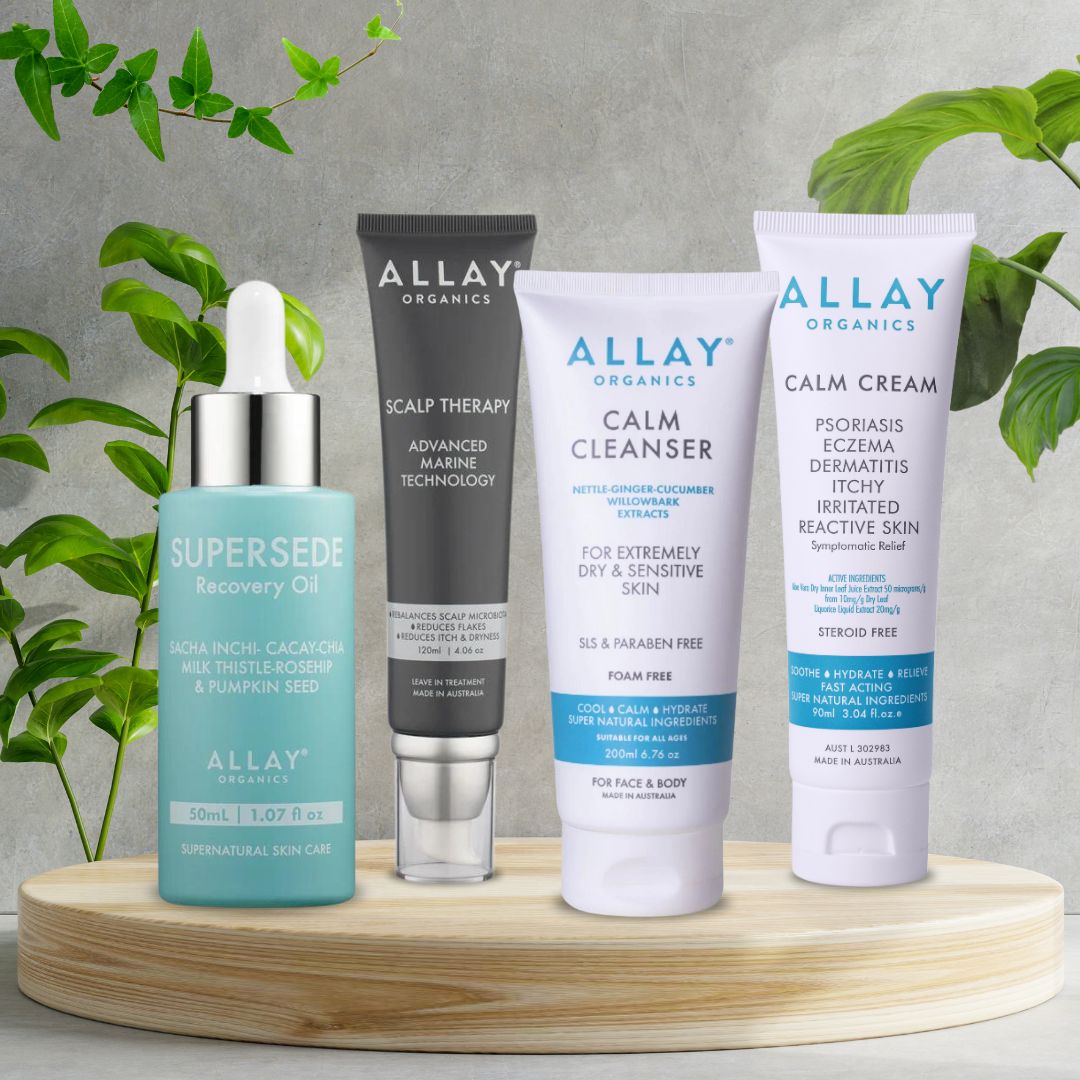
Discover the gentle yet effective care of Allay Organics, a range of Australian natural skincare products designed to soothe and support sensitive skin. From calming creams to nourishing hair and scalp treatments, Allay Organics provides relief for those struggling with conditions like atopic dermatitis and dry, irritated skin.
From $23.95
Shop Collection