

The Right Way to Moisturise Eczema-Prone Skin (and What to Avoid)
, by Tatianna Gerard, 13 min reading time
, by Tatianna Gerard, 13 min reading time
Eczema, also known as atopic dermatitis, is a chronic inflammatory skin condition that affects an estimated 2.8 million Australians. Despite how common it is, eczema is often misunderstood or underestimated. It causes red, dry, and scaly skin that can become painful, itchy, and prone to infection — symptoms that can significantly impact daily life and self-confidence.
According to Eczema Support Australia, eczema is the most prevalent chronic inflammatory skin condition worldwide, affecting up to 35.6% of Australian children under six years old. The condition is more than just a skin issue — it can lead to sleep disruption, emotional distress, and a reduced quality of life comparable to that of other major chronic diseases.
Because eczema weakens the skin’s natural barrier, keeping the skin properly moisturised is one of the most effective ways to manage symptoms and reduce flare-ups. However, not all moisturisers — or routines — are suitable for eczema-prone skin. The right moisturising technique and ingredients can help restore comfort and prevent inflammation, while the wrong ones can make symptoms worse.
Healthy skin acts as a natural barrier that locks in moisture and protects against irritants, allergens, and bacteria. This barrier is made up of tightly packed skin cells surrounded by natural oils, ceramides, and lipids — all of which help maintain hydration and strength.
In eczema-prone skin, however, this protective layer doesn’t work as efficiently. Research has shown that people with eczema tend to have lower levels of ceramides and essential fatty acids, meaning the skin cannot retain water effectively. This leads to transepidermal water loss — where moisture escapes through the outer layer of the skin — resulting in dryness, irritation, and increased vulnerability to infection.
Recent Australian research published in the Journal of Allergy and Clinical Immunology supports this connection. The study, led by the University of Melbourne’s Allergy and Lung Health Unit, found that infants with lower levels of specific skin lipids and ceramides were more likely to develop atopic dermatitis (eczema) by the age of one. In particular, reduced levels of protein-bound ω-hydroxyl sphingosine ceramides (POS ceramides) — key building blocks of the skin barrier — were linked to a higher risk of eczema in early life.
These findings suggest that skin barrier abnormalities may appear before eczema develops, rather than as a result of the condition. In other words, a weakened barrier caused by disrupted lipid balance may be one of the first steps toward eczema onset — highlighting how crucial moisture and lipid replenishment are for prevention and management.
Maintaining a healthy balance of ceramides, fatty acids, and natural oils is therefore vital for those with eczema. Regular moisturising helps restore these components, strengthen the skin’s structure, and reduce flare-ups caused by dryness and environmental triggers.
Not all moisturisers work the same way. The most effective ones for eczema-prone skin usually combine three key components — emollients, humectants, and occlusives. Each plays a specific role in restoring hydration, reducing irritation, and strengthening the skin’s natural barrier.
How they work: Emollients fill in the tiny gaps and cracks between skin cells, making the outer layer feel smoother and more flexible. They help repair rough, flaky skin and reduce the tightness that often comes with dryness.
Mechanism: Think of emollients as “mortar” between the “bricks” of your skin. They contain lipids and oils that mimic the skin’s own natural fats, helping to rebuild its protective structure. This not only makes the skin feel softer but also improves its ability to retain moisture.
Examples: Shea butter, jojoba oil, squalane, sunflower seed oil, and cocoa butter.
Best for: Daily barrier repair and reducing flaking or roughness.
How they work: Humectants draw water into the top layers of the skin from the deeper tissues or from the air around you (when humidity is high). They’re particularly useful for giving dehydrated skin an instant boost of moisture.
Mechanism: These ingredients contain molecules that bind to water — almost like sponges — increasing hydration within the skin’s surface layers. This helps plump up dry, irritated skin and relieve itching caused by tightness.
Examples: Glycerin, hyaluronic acid, aloe vera, panthenol (vitamin B5), and urea (in low concentrations).
Best for: Hydration support and reducing the sensation of dryness.
How they work: Occlusives form a thin film over the skin to lock moisture in and block external irritants out. This layer helps prevent further water loss — essential for eczema-prone skin that loses hydration quickly.
Mechanism: By creating a semi-permeable seal on the skin’s surface, occlusives slow down transepidermal water loss (TEWL) — the main cause of dryness in eczema. This helps maintain a stable level of hydration and allows the skin barrier time to repair.
Examples: Petrolatum (Vaseline), beeswax, lanolin, ceramides, and dimethicone.
Best for: Night-time use or on areas that are especially dry or cracked, such as elbows, knees, and hands.
For eczema-prone skin, the most effective moisturisers use a combination of all three.
This layered approach helps restore the skin’s lipid balance, reduce inflammation, and minimise future flare-ups.
A good example is Allay Organics Calm Cream, which blends natural emollients (like shea butter) with humectants (like aloe vera) to deliver balanced hydration without synthetic fragrance or harsh preservatives — making it ideal for eczema-prone skin.
When it comes to managing eczema, how you apply your moisturiser is just as important as which one you choose. The goal is to trap moisture in the skin before it evaporates — helping to keep the barrier strong and flare-ups under control.
The ideal time to moisturise is within three minutes of bathing or showering. After cleansing with lukewarm water, gently pat (not rub) your skin with a soft towel, leaving it slightly damp. Then, apply your moisturiser straight away to lock in that surface hydration.
Using lukewarm water is crucial — hot water can strip away natural oils, leaving your skin drier and more irritated.
Apply enough moisturiser to create a thin, even layer across the skin. For very dry or thickened areas (like elbows, knees, or hands), use a little more product to ensure proper coverage. A general rule is about a pea-sized amount per area for creams and a fingertip unit for thicker ointments.
Avoid rubbing or massaging vigorously. Instead, smooth your moisturiser in gentle downward strokes, following the direction of body hair. This method reduces friction and prevents further irritation to already sensitive skin.
Eczema-prone skin loses water quickly, so once- or twice-daily application often isn’t enough. Apply your moisturiser at least twice daily, or more often if your skin feels dry, tight, or itchy. Keep a small travel-sized product with you so you can reapply as needed — especially after washing your hands or being in air-conditioned environments.
Before bed, apply a slightly thicker layer or use a richer cream to create an overnight barrier. The skin repairs itself while you sleep, so this is the best time to help it retain moisture. You can even layer a light emollient first (like aloe or jojoba-based cream) followed by a heavier occlusive to seal it in.
Read related article: Tips for Bathing and Moisturising with Eczema
Proper moisturising isn’t just about soothing the skin — it’s about restoring balance and preventing inflammation before it starts. When done consistently, it helps reduce reliance on medicated creams and supports a more comfortable, resilient skin barrier over time.
If you’re using or thinking about trying the Allay Organics skincare range, we’ve put together a simple step-by-step guide on how to use the products together for best results. You can read it here: Allay Organics: Your Next Best Solution for a Comprehensive Sensitive Skin Care.
Even with the best intentions, some skincare products or daily habits can unintentionally worsen eczema. Understanding what to avoid helps you protect your skin barrier and prevent flare-ups before they start.
Fragrance is one of the most common triggers for eczema irritation. Synthetic perfumes can contain hundreds of undisclosed chemical compounds, many of which can cause redness, itching, or burning on sensitive skin. Always look for products labelled fragrance-free rather than “unscented” — as “unscented” formulas may still use masking agents to hide odours.
Certain types of alcohol — particularly denatured alcohol (alcohol denat.) or isopropyl alcohol — can strip the skin of natural oils and increase dryness. Similarly, preservatives such as methylisothiazolinone (MI) or formaldehyde-releasing agents can trigger allergic reactions. Instead, opt for products that use gentle, plant-derived preservatives or those formulated for sensitive skin.
While ingredients like salicylic acid, glycolic acid, and retinol are popular in general skincare, they can be too harsh for eczema-prone skin. These exfoliating or resurfacing ingredients can disrupt the delicate skin barrier, leading to stinging or peeling. Save these actives for when your skin is completely calm, or avoid them altogether if you experience frequent flare-ups.
Frequent washing or long, hot showers strip away the skin’s natural oils. This weakens the barrier and can trigger itchiness within minutes of drying off. Stick to short, lukewarm baths or showers, and always moisturise immediately afterwards to replace lost hydration.
It can be tempting to try new creams or cleansers, especially when dealing with recurring flare-ups. However, introducing too many products at once makes it hard to identify what’s helping (or harming) your skin. Try to stick with one trusted routine for at least two weeks before making any changes.
If you’re checking ingredient labels, be cautious with:
When your skin barrier is compromised, choosing the right ingredients can make all the difference. Instead of focusing on what to avoid, here’s what to look for — ingredients that soothe irritation, restore balance, and strengthen your skin over time.
Ceramides are the natural lipids that act like glue between your skin cells, keeping moisture in and irritants out. Replenishing ceramides helps rebuild the skin barrier and reduce water loss.
Humectants draw water into the top layer of the skin, relieving dryness and tightness.
Certain plant-based ingredients can help reduce redness, itching, and inflammation without the side effects of harsh medicated creams.
Some ingredients go beyond soothing — they actively support repair and protect against infection.
Eczema can make even simple routines feel overwhelming — but with the right care, your skin can become calmer, softer, and more resilient. Moisturising the right way is one of the most powerful steps you can take to help your skin heal itself.
The key is to keep things simple: gentle products, consistent application, and ingredients that restore rather than strip. When you choose skincare that supports your barrier instead of fighting it, your skin finally gets the chance to recover.
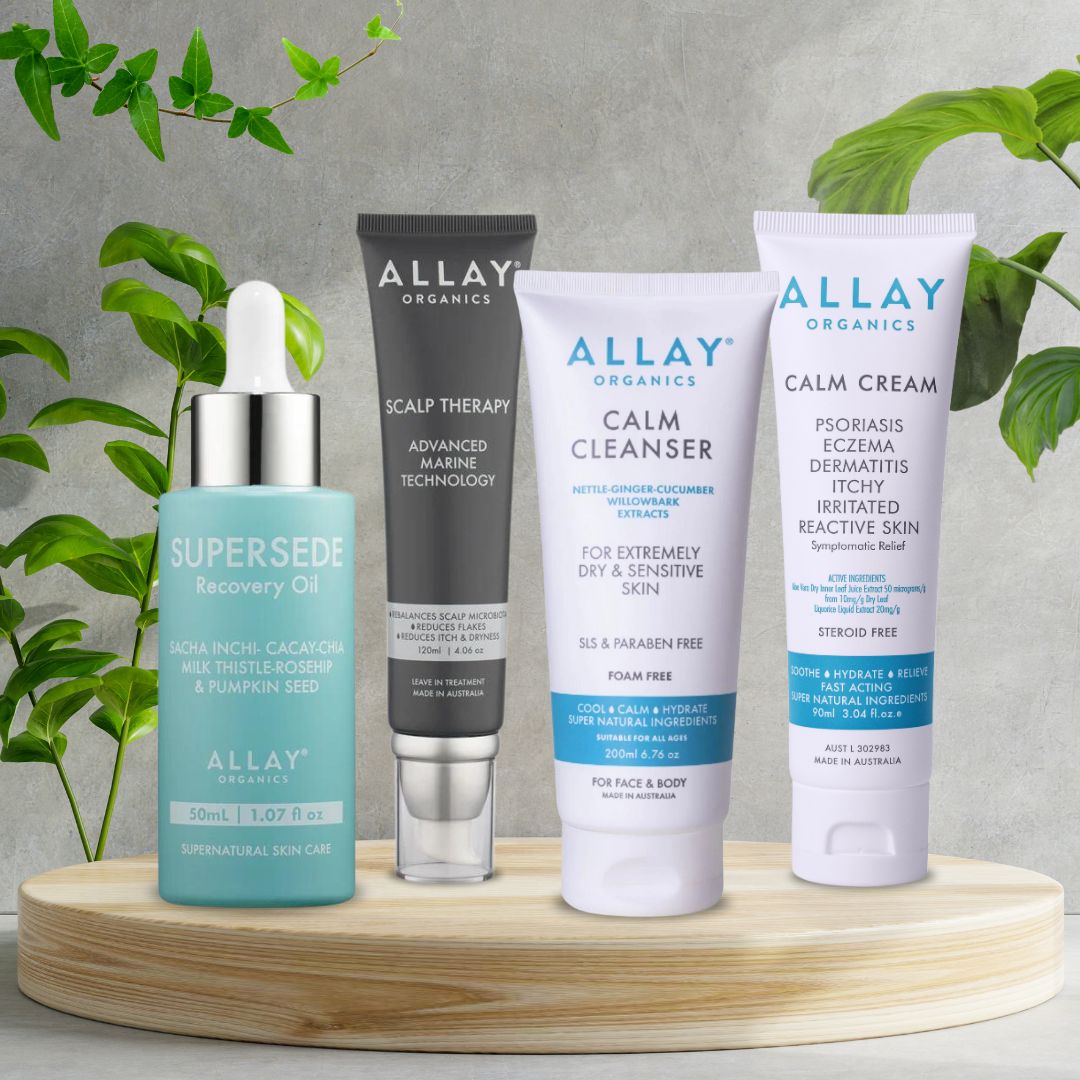
Discover the gentle yet effective care of Allay Organics, a range of Australian natural skincare products designed to soothe and support sensitive skin. From calming creams to nourishing hair and scalp treatments, Allay Organics provides relief for those struggling with conditions like atopic dermatitis and dry, irritated skin.
From $23.95
Shop Collection