What Is Face Basting? The Skincare Trend Explained
, by Tatianna Gerard , 12 min reading time
, by Tatianna Gerard , 12 min reading time
If you've spent any time scrolling through skincare content on TikTok, you may have come across people going to bed with their faces covered in a thick layer of white cream. No, they're not applying a face mask — they're trying a skincare trend known as “face basting.”
Despite the slightly unusual name, face basting is actually based on a fairly familiar skincare idea. The trend typically involves applying a zinc oxide-containing barrier cream as the final step of an evening skincare routine, with the aim of creating a protective layer over the skin and helping to reduce moisture loss overnight.
It's become particularly popular among people looking for ways to care for dry, tight or irritated skin and support the skin barrier. And while social media may have given the technique a catchy new name, ingredients such as zinc oxide have long been used in barrier creams designed to protect the skin.
But does that mean you should grab any zinc cream and cover your entire face with it? Not necessarily. Face basting won't suit every skin type, and how you use a barrier cream matters just as much as what's in it.
So, let's take a closer look at what face basting is, how it works, its potential benefits and how to try it safely.
Face basting is a skincare technique that involves applying a layer of zinc oxide-based barrier cream over the skin, typically as the final step of your nighttime skincare routine. The product is then left on overnight, creating a protective layer while you sleep.
The trend was popularised on social media by dermatologist Dr Shereene Idriss, who demonstrated using zinc oxide-containing nappy cream as a way of caring for a dry or irritated skin barrier. While the term “face basting” may be relatively new, the basic idea behind it isn't — barrier creams have long been used to help protect the skin and reduce moisture loss.
The technique gets its rather memorable name from the idea of “basting” the skin: instead of applying a thin layer of moisturiser and letting it absorb completely, you're essentially coating the skin with a more substantial protective layer as the final step of your routine.
If face basting sounds familiar, you may be thinking of another viral skincare technique: slugging.
The two follow a similar principle, but they're not quite the same.
With slugging, a highly occlusive product such as petroleum jelly is applied over your skincare products to create a barrier that helps reduce water loss from the skin.
Face basting, on the other hand, typically uses a zinc oxide-containing barrier cream. Zinc oxide is commonly found in products such as barrier and nappy creams, where it helps form a protective layer over the skin.
In both cases, the basic idea is to seal in moisture and give dry or irritated skin some additional barrier protection. The main difference is the type of product being used — and, as we'll explore next, zinc oxide is a big part of what has made face basting such a popular skincare trend.
Zinc oxide is a naturally occurring mineral compound made from zinc and oxygen. The zinc oxide used in skincare and other consumer products is manufactured and purified to meet appropriate quality standards.
One of zinc oxide's key properties is its ability to act as a physical barrier on the surface of the skin. Rather than needing to penetrate deeply into the skin to do its job, it forms a protective layer that helps shield the skin from external irritants and excessive moisture while also helping to reduce water loss.
This is particularly relevant when the skin barrier is dry or compromised. The outermost layer of your skin normally helps keep moisture in and unwanted substances out. When that barrier isn't functioning as effectively — for example, after over-cleansing, exposure to harsh products or environmental dryness — water can escape more readily, leaving skin feeling dry, tight, flaky or uncomfortable.
Face basting essentially takes this familiar barrier-protection principle and applies it to facial skincare.
By applying a zinc oxide-containing barrier cream as the final step of a nighttime routine, the idea is to create an additional protective layer that can help limit moisture loss while you sleep. For someone whose skin is particularly dry or temporarily irritated, that may leave the skin feeling softer and more comfortable by morning.
However, zinc oxide isn't a magic ingredient that instantly “repairs” the skin barrier, and the overall formulation of the product matters too. Other ingredients within a barrier cream can contribute emollient, moisturising or occlusive properties, so it's worth looking at the product as a whole rather than choosing something simply because zinc oxide appears on the ingredient list.
And one important distinction: although zinc oxide is also widely used as a UV filter in mineral sunscreens, a zinc oxide barrier cream isn't automatically a sunscreen. Unless the product has been specifically formulated, tested and labelled to provide sun protection, it shouldn't be used as a replacement for your regular sunscreen.
If you'd like to give face basting a try, the good news is that the routine itself is relatively simple. You don't need to completely change your skincare routine — the barrier cream is generally applied as the final step before bed.
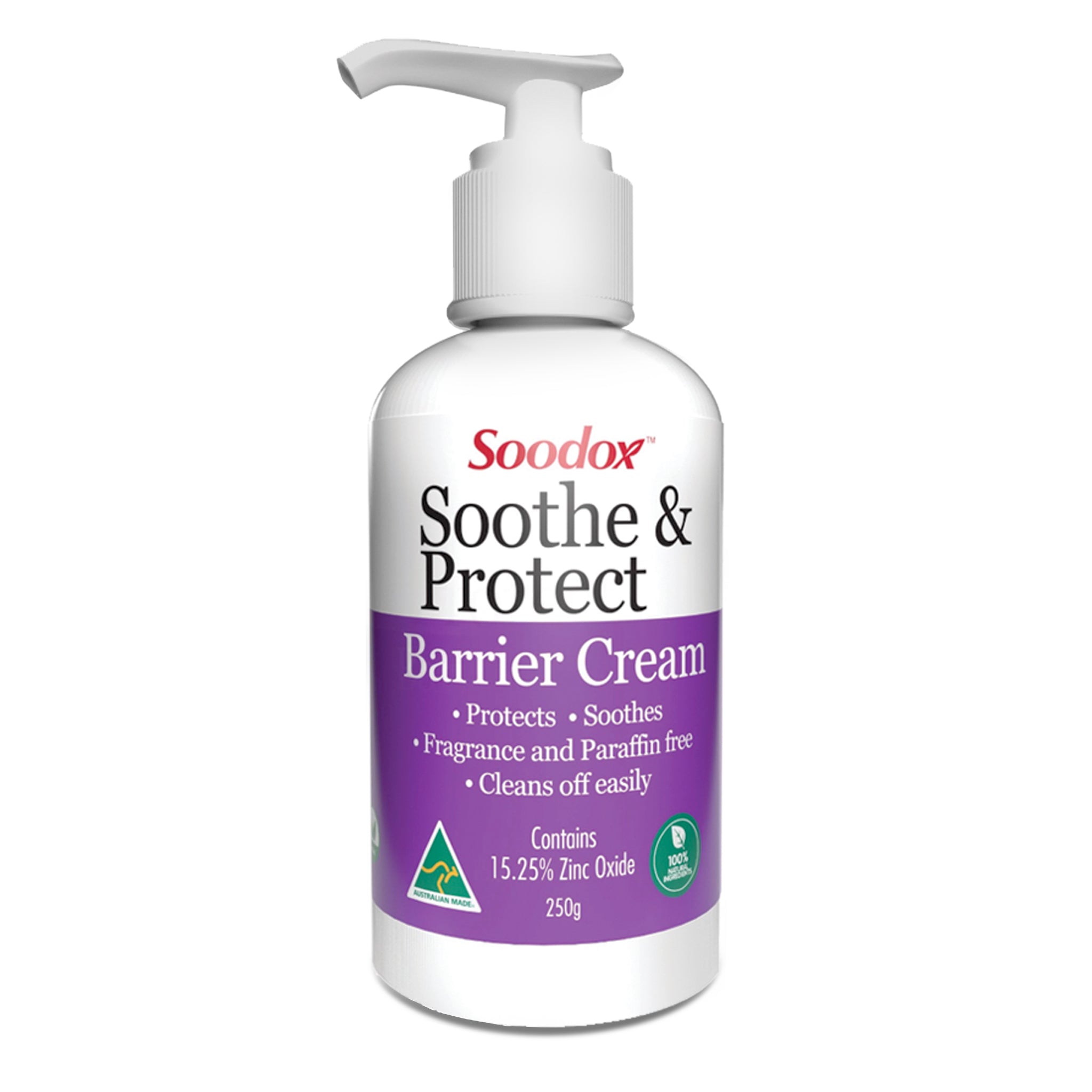
For this routine, we're using Soodox Barrier Cream, which contains zinc oxide and can be used to create that protective layer over the skin.

Begin by cleansing your face to remove makeup, sunscreen, excess oil and everyday build-up. Use a gentle cleanser that suits your skin and avoid aggressively scrubbing or exfoliating, particularly if your skin already feels dry or irritated.
If irritation or sensitivity is one of the reasons you're considering face basting, Allay Organics Calm Cleanser is one gentle option to consider.

Available at Aussie Pharma Direct, this foam-free cleanser is designed for sensitive, dry and irritation-prone skin and uses botanical ingredients including ginger, cucumber, nettle and willow bark. It's also alcohol-free and fragrance-free, making it a useful option when you're trying to keep your skincare routine simple and gentle.
Once you've finished cleansing, pat your face dry rather than rubbing it with your towel.
Next, apply any gentle hydrating products or moisturiser you normally use and allow them to settle into the skin.
If you're face basting because your skin already feels irritated or your skin barrier is struggling, this probably isn't the night to experiment with a long list of powerful actives. Consider keeping the routine simple and avoiding products that you already know tend to irritate your skin.
For your moisturising step, you could use Allay Organics Calm Cream, which is formulated for dry and sensitive skin.

The Australian-made cream is steroid-free, alcohol-free and fragrance-free and is designed to moisturise and nourish dry skin. Apply your moisturiser first and allow it to settle before moving on to the zinc oxide barrier cream as the final “basting” layer.
Both the Allay Organics Calm Cleanser and Calm Cream are available as a bundle, so they can also be paired together if you're looking to keep the routine relatively simple.
As the final step, apply a layer of Soodox Barrier Cream over the areas where you want additional barrier protection.
Soodox contains zinc oxide, which helps form a protective barrier over the skin. This is essentially the “basting” part of the routine.
You also don't necessarily need to recreate the extremely thick, completely white-coated faces you may have seen on social media. More isn't automatically better. Start with an appropriate layer and see how your skin responds.
Once the barrier cream has been applied, leave it in place while you sleep.
Because barrier creams are designed to remain on the surface of the skin, don't expect the product to disappear completely in the same way as a lightweight moisturiser. You may still be able to see or feel some of the cream on your skin.
And, perhaps practically, a white pillowcase you don't mind washing afterwards might be a good idea!
In the morning, gently cleanse your face to remove any remaining barrier cream. Avoid vigorous scrubbing — particularly if the reason you tried face basting in the first place was because your skin felt dry or irritated.
You can then continue with your usual morning skincare routine.
And don't forget sunscreen. Although Soodox contains zinc oxide — an ingredient that's also used as a UV filter in mineral sunscreens — that doesn't automatically make a zinc oxide barrier cream a sunscreen. You should still apply a properly formulated and labelled sunscreen as part of your daytime routine.
You don't have to make face basting an every-night ritual. If you're curious about the trend, you can start occasionally or try it on particularly dry areas first and see how your skin responds.
As with any product you're using on your face for the first time, consider patch testing beforehand. If you experience persistent irritation, burning, swelling or worsening skin concerns, stop using the product and seek advice from an appropriate healthcare professional.
While face basting may sound like a simple way to give your skin some extra barrier protection, it won't necessarily suit every skin type. A thick barrier cream that feels comforting on very dry skin may feel too heavy for someone whose skin is naturally oily or prone to congestion.
Face basting is most likely to appeal to people experiencing dryness, tightness, flaking or temporary irritation, particularly when the skin barrier has been affected by factors such as dry weather, over-cleansing or overuse of certain skincare products.
If you have oily, combination or acne-prone skin, covering your entire face with a thick barrier cream may not be the best fit for your routine.
Heavy or highly occlusive products can feel uncomfortable on oily skin, and some formulations may contribute to congestion or breakouts in people who are already prone to them. That doesn't necessarily mean zinc oxide itself is the problem — remember that a product contains multiple ingredients, and your skin's response will depend on the overall formulation as well as your individual skin type.
If you're curious, starting with a small area rather than your entire face can help you see how your skin responds.
Face basting should also be viewed as a skincare technique, not a treatment for every skin concern.
If you're experiencing persistent or severe redness, itching, pain, swelling, broken or weeping skin, recurrent rashes or another ongoing skin problem, simply covering it with a barrier cream may not address the underlying cause. In these situations, it's worth speaking with a doctor, pharmacist or dermatologist for appropriate advice.
Ultimately, you don't need to face baste simply because it's trending. But if your skin is dry and in need of some extra barrier protection, a carefully chosen zinc oxide barrier cream may be worth considering — provided it suits your skin and is used according to its directions.