

What Actually Helps Improve Gut Health?
, by Tatianna Gerard , 20 min reading time
, by Tatianna Gerard , 20 min reading time
Bloating. Irregular bowel habits. Discomfort after meals. Low energy. Ongoing digestive discomfort is often your body signalling that your gut needs support.
Your gut is more than just a system that digests the food you consume. It’s home to trillions of bacteria — known as the gut microbiome — that influence how you absorb nutrients, regulate inflammation, and even support immune function. In fact, a large portion of your immune system is closely connected to your digestive tract. Research suggests that approximately 70–80% of immune cells are located within the gut, where they interact constantly with the intestinal microbiota (your gut bacteria), the intestinal epithelial lining, and the local mucosal immune system.
When your gut is balanced and functioning well, your body is better equipped to absorb nutrients, maintain regular digestion, and respond to everyday stressors. But when that balance is disrupted — due to stress, poor diet, illness, antibiotics or lifestyle factors — symptoms can start to show, and affect your .
So, what helps improve gut health? We’ll explore how probiotics, fibre, protein and collagen help support your digestive system and share practical tips on how you can do so in a sustainable way.
When people talk about “gut health”, they’re usually referring to how well the digestive system is functioning — but it goes much deeper than that.
Your gut is your gastrointestinal system, which includes the stomach, small intestine, large intestine and colon. Its primary role is to digest food, absorb nutrients, and eliminate waste.
While there isn’t one single clinical definition of “gut health,” it is generally understood to involve having a balanced and diverse gut microbiome alongside minimal digestive symptoms. A healthy gut supports nutrient absorption, regular bowel movements, immune function, mental wellness, and overall wellbeing.
Gut health involves three main components working together:
Trillions of microorganisms — including bacteria, viruses and fungi — live primarily in your large intestine. Together, they form what’s known as the gut microbiome.
There are more than 1,000 different species of microbes in the gut. Some can contribute to disease, but many are beneficial and necessary for good health. These microbes help break down certain fibres and nutrients that your body cannot digest on its own, turning them into compounds your body can use.
Gut health is largely about balance — having enough beneficial bacteria to keep potentially harmful microbes in check.
The inside of your intestine is lined with a thin layer of cells that acts as a protective barrier. This lining allows nutrients to pass into the bloodstream while preventing unwanted substances — such as toxins or harmful bacteria — from entering circulation.
When the gut lining is functioning well:
If the barrier becomes compromised, it may contribute to digestive discomfort and increased immune activation.
Gut health also includes how effectively your body:
Even if you’re eating a nutritious diet, poor gut function can limit how much your body actually absorbs.
Several factors can affect gut balance and digestive function. When these disruptions persist, they may contribute to changes in the gut microbiome — sometimes referred to as dysbiosis, which describes an imbalance between beneficial and harmful bacteria in the gut.
Several factors can affect gut balance and digestive function, including:
Supporting gut health isn’t about one single supplement or quick fix. It’s about creating the right environment for your microbiome, protecting your gut lining, and supporting efficient digestion.
Here are the key elements that contribute to a healthier gut.
Fibre is one of the most important nutrients for gut health — not because your body digests it, but because it doesn’t.
Unlike protein, fats and carbohydrates, fibre passes through the small intestine largely undigested. This is key to how it supports the gut. Here’s how it works:
When fibre reaches the large intestine, it becomes fuel for your gut bacteria. Beneficial microbes ferment certain types of fibre and convert them into compounds called short-chain fatty acids (SCFAs) — including butyrate, acetate and propionate.
These SCFAs play several important roles:
The intestinal lining acts as a selective barrier, allowing nutrients through while keeping harmful substances out.
Short-chain fatty acids produced from fibre fermentation help support the tight junctions between intestinal cells. These tight junctions act like seals between cells. When functioning properly, they maintain a strong barrier and reduce unnecessary immune activation.
There are two main types of fibre:
Together, they improve stool consistency and support healthy bowel movements.
Different bacteria prefer different types of fibre. By eating a wide range of plant foods, you provide fuel for a wider variety of microbes.
So, this is why you need to aim for a variety of:
Probiotics are live microorganisms that, when consumed in adequate amounts, can help support the balance of bacteria in your gut. They are most commonly bacteria from groups such as Lactobacillus and Bifidobacterium, though some yeasts (like Saccharomyces boulardii) are also used.
Depending on the strain, probiotics may support:
However, benefits are strain-specific — meaning different probiotics serve different purposes.
Read related article: Choosing the Right Probiotic: The Benefits of Different Strains for Your Health
Probiotics can be obtained from both fermented foods and supplements.
Fermented foods contribute beneficial bacteria and may support microbiome diversity as part of a balanced diet.
Supplements often provide higher, more concentrated doses of specific strains. They may be useful in situations such as post-antibiotic recovery or when targeting particular digestive concerns.
Prebiotics are types of non-digestible fibre that act as food for beneficial gut bacteria. Unlike probiotics — which are live bacteria — prebiotics are the compounds that help those bacteria grow and thrive.
In simple terms: Probiotics add beneficial bacteria. Prebiotics feed them.
Some of the most studied prebiotic fibres include:
These fibres selectively stimulate the growth of beneficial bacteria such as Bifidobacteria and Lactobacilli.
Prebiotics are naturally found in many plant foods, including:
Protein plays a crucial role in maintaining gut health — but the key word here is adequate.
The cells lining your intestine (called enterocytes) have one of the fastest turnover rates in the body. They are constantly renewing and repairing themselves. To do this effectively, the body relies on amino acids — the building blocks of protein.
Without sufficient protein intake, the body may struggle to maintain and repair the intestinal lining, which is essential for nutrient absorption and barrier integrity.
Certain amino acids, particularly glutamine, serve as an important energy source for intestinal cells. Glutamine helps:
Protein doesn’t just support structural repair — it also affects the gut microbiota.
A systematic review examining the effects of dietary protein on gut microbiota found that several factors influence how protein interacts with the digestive system, including:
Most protein digestion occurs in the stomach and small intestine. However, when protein is not fully digested — particularly in higher amounts — it can reach the large intestine, where gut bacteria ferment it.
This fermentation produces metabolites that may have either beneficial or less favourable effects depending on the type and quantity of protein consumed.
Essentially, the research suggests:
Collagen is a structural protein that plays a key role in maintaining connective tissue throughout the body — including the gut lining.
The intestinal wall relies on strong connective tissue to maintain its structure and barrier function. Collagen contains amino acids such as glycine, proline and hydroxyproline, which are important for supporting tissue integrity and repair.
While research on collagen specifically for gut health is still evolving, its role in connective tissue maintenance makes it relevant to overall intestinal structure.
There are several types of collagen in the body, but the most relevant for gut and connective tissue health include:
Most collagen supplements (such as hydrolysed collagen or collagen peptides) primarily contain Type I and Type III collagen.
Hydrolysed collagen has been broken down into smaller peptides, making it easier to digest and absorb. Once absorbed, the body uses the amino acids as needed for collagen production and tissue repair.
Read related article: Why Collagen is Good for You: Benefits & Ways to Supplement
Water supports digestion by:
Dehydration can contribute to constipation and sluggish digestion.
The gut and brain are closely connected through the gut–brain axis. Chronic stress can alter gut motility and microbiome balance.
Supporting stress management — through sleep, movement and relaxation — can positively influence digestive health.
Diets high in refined sugars and heavily processed ingredients may negatively impact microbiome diversity for several reasons.
Highly refined foods are often low in fibre — which means beneficial gut bacteria receive less fuel. When fibre intake drops, bacteria that rely on fermentable fibres may decline, reducing overall microbial diversity. At the same time, diets high in added sugars can encourage the growth of less favourable bacteria, potentially shifting the balance of the microbiome.
Processed foods may also contain additives, emulsifiers and artificial sweeteners that, in some research, have been shown to alter gut bacterial composition or influence the intestinal barrier in animal models. While human research is still developing, consistent intake of highly processed foods is generally associated with lower microbial diversity.
Alcohol can also affect gut health when consumed in excess.
Regular high alcohol intake may:
Alcohol is metabolised in the liver, but it first passes through the digestive tract, where it can directly affect gut cells and bacteria. Over time, excessive intake may contribute to changes in microbial composition and compromise gut barrier integrity.
Gut health isn’t built from a single supplement or a short-term fix. It’s shaped by consistent daily habits — what you eat, how you manage stress, how well you sleep, and whether your body is receiving the nutrients it needs to maintain balance.
A healthy gut relies on:
Each of these elements works together. When your microbiome is supported, your gut lining is maintained, and digestion functions efficiently, your body is better positioned to absorb nutrients and regulate immune responses effectively.
If you’re looking to strengthen your routine, nutritional support can play a practical role. In some cases — particularly if you have dietary restrictions, digestive sensitivities, recent antibiotic use, or limited whole-food intake — supplementing with a quality probiotic may help support microbial balance.

ANC Probiotic 32 Billion contains a blend of beneficial Lactobacillus and Bifidobacterium strains to help support digestive balance and immune function. Providing 32 billion live cultures per dose, it offers a convenient way to help maintain gut microbiome diversity when dietary intake alone may not be sufficient.
Shop the ANC Probiotic 32 Billion at Aussie Pharma Direct.
And if you’re looking to further support your gut through adequate protein, collagen and prebiotic fibre intake, we also stock a range of Chief Nutrition products that can contribute to gut health in multiple ways — including probiotics, prebiotic fibre, collagen and quality protein sources.

Made from premium grass-fed Australian milk with minimal processing, this whey protein concentrate (WPC) is naturally rich in essential amino acids to support muscle repair, performance and everyday wellbeing. It contains no added sweeteners or unnecessary additives, making it a simple way to support adequate protein intake — which plays a role in maintaining gut lining repair and overall tissue health.
From $89.95
Shop Collection
Made from 100% Australian grass-fed hydrolysed bovine collagen peptides (Type I & III), this formula contains approximately 96% protein with a small molecular weight (~1kDa) for easy digestion and absorption. It’s free from sugar, dairy, gluten and GMOs. Collagen provides key amino acids such as glycine and proline that support connective tissue — including the structural integrity of the gut lining.
From $49.95
Shop Collection
These bars contain grass-fed bovine collagen (Type I & III) to support joints, skin and gut health. They’re packed with collagen, fibre and healthy fats, making them suitable for low-carb or keto lifestyles. They’re gluten-free, dairy-free and made without sugar alcohols, vegetable oils or artificial sweeteners — offering a convenient way to support protein and fibre intake on the go.
From $5.95
Shop Collection
Formulated with lupin protein and prebiotic fibre, these bars help support gut health and digestion while providing plant-based protein. They are low in sugar and made without sugar alcohols or artificial sweeteners. The inclusion of prebiotic fibre helps nourish beneficial gut bacteria as part of a balanced diet.
From $3.19
Shop Collection
Made from organic, grass-fed Australian beef, these bars are naturally high in protein, iron and vitamin B12. They’re low in carbohydrates and low in sugar, making them a practical whole-food-based protein option. Adequate protein supports tissue repair — including the renewal of cells lining the digestive tract.
From $6.50
Shop Collection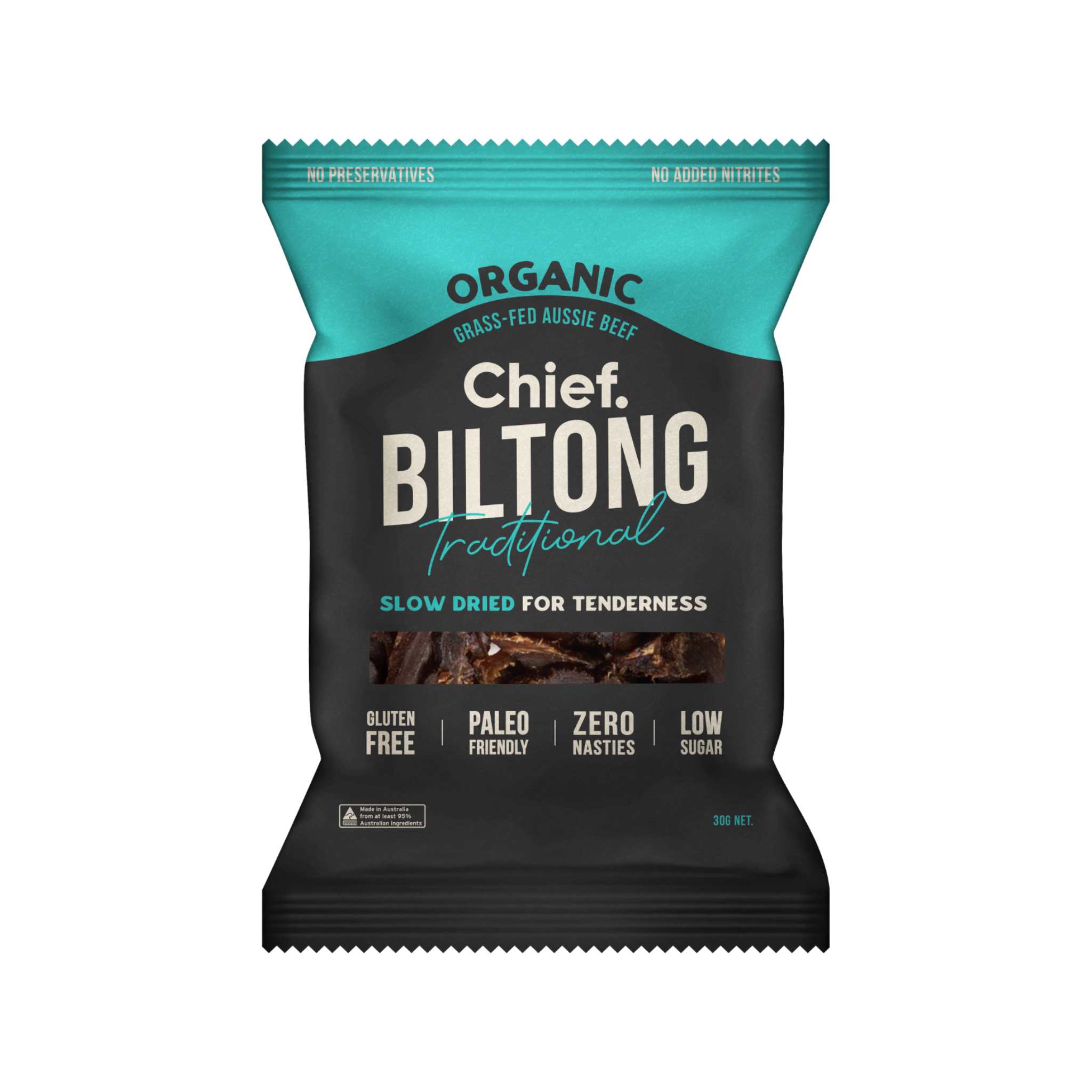
Made from 100% organic, grass-fed and grass-finished Australian beef, this biltong is naturally high in protein, low in carbohydrates and contains no added sugar. It’s slow air-dried for maximum tenderness and flavour, and made without nitrates, nitrites, seed oils or artificial preservatives. As a whole-food protein source, it supports adequate daily protein intake — which plays an important role in maintaining tissue repair, including the renewal of the gut lining.
From $6.95
Shop Collection